

No products in the cart.
Transistor
Showing all 6 results
- Transistor
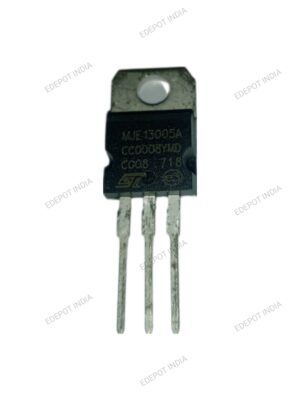
13005A NPN Power Transistor – High-Voltage Switching BJT (4A 400V)
The 13005A is a high-voltage NPN bipolar junction transistor (BJT) specifically designed for high-speed switching power supplies, electronic ballasts, and motor control. With a breakdown voltage of 400V and a collector current of 4A, it is a robust component for AC-to-DC conversion circuits. The 13005A is frequently used in pairs in half-bridge converters and is a standard replacement part for CFL lamp drivers and compact power adaptors. Enhance the efficiency of your power switching projects with this reliable industrial-grade transistor.
SKU: EC-Transistor-8556 - Transistor
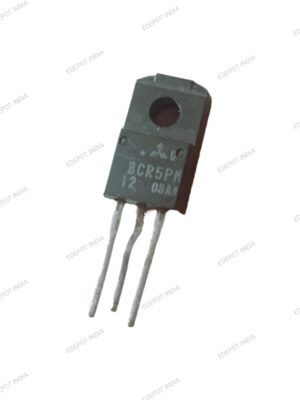
BCR5PM-12 Triac – 3-Pin High Voltage AC Switch (5A 600V)
The BCR5PM-12 is a professional-grade silicon Triac designed for high-speed AC switching and control applications. With a 5A current rating and a 600V peak voltage tolerance, it is ideal for light dimmers, motor speed controllers, and heating element regulators. The compact 3-pin package ensures easy installation, while its reliable gate trigger sensitivity makes it compatible with various control circuits. Whether you are repairing industrial appliances or building a custom smart home controller, the BCR5PM-12 provides stable and safe AC power management.
SKU: EC-Triac-8552 - Transistor
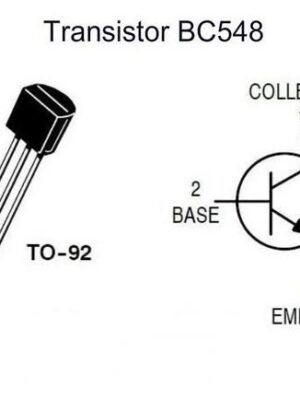
BC548 NPN General Purpose Transistor – TO-92 Package (10 Piece Set)
The BC548 is a standard NPN bipolar junction transistor (BJT) widely used in electronic circuits for switching and amplification. This 10-piece set is perfect for hobbyists, students, and repair technicians. With its TO-92 package, it is easy to use in breadboards and PCBs. Known for its low noise and high reliability, the BC548 is the go-to component for small signal processing and low-power switching applications. Ensure your DIY projects have the best signal integrity with these high-quality BC548 transistors.
SKU: EC-Transistor-8506 - Transistor
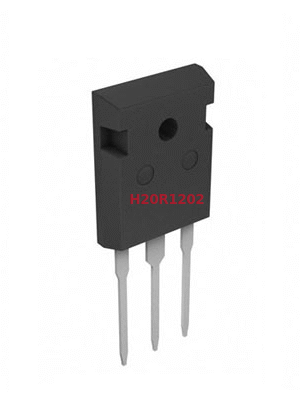
H20R1202 High-Voltage IGBT – 3-Pin Induction Cooktop Repair Part (20A 1200V)
The H20R1202 is a high-performance Insulated Gate Bipolar Transistor (IGBT) specifically designed for high-voltage and high-current switching applications. It is the industry-standard replacement part for induction cooktops and high-frequency inverters. With a robust rating of 20 Amps and a massive 1200V breakdown voltage, it handles the intense electrical demands of magnetic heating elements with ease. Featuring low saturation voltage and high-speed switching, the H20R1202 ensures your kitchen appliances and industrial converters operate efficiently and safely.
SKU: EC-IGBT-8553 - Transistor
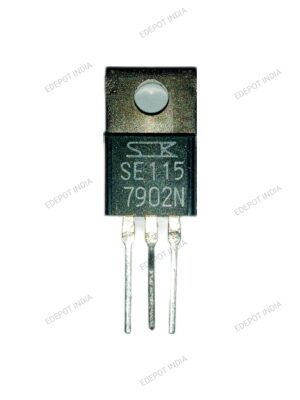
SEC115 Error Amplifier IC – Precision Voltage Regulator for TVs
The SEC115 is a specialized error amplifier and voltage regulator IC designed for use in the feedback loop of television power supplies. Featuring a 3-pin configuration, this IC monitors the output voltage and provides a precise control signal to the primary side regulator, ensuring your TV’s power board maintains a constant and safe voltage. It is a critical component for fixing ‘voltage drift’ issues or ‘over-voltage’ protection triggers. Restore the stability of your display equipment with this professional-grade precision IC.
SKU: EC-IntegratedCircuit-8557 - Transistor
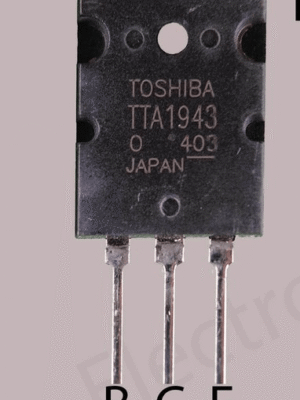
TTA1943 Toshiba PNP Bipolar Power Transistor – High-Fidelity Audio Output
Elevate your audio performance with the TTA1943 Toshiba PNP Power Transistor. This high-power bipolar junction transistor (BJT) is world-renowned for its use in professional high-fidelity audio amplifiers. With a power dissipation of 150W and a 15A collector current, it provides the punchy, clean, and distortion-free audio reproduction that audiophiles demand. Operating at up to 230V, it is the perfect companion to the TTC5200 for building a classic push-pull amplifier stage. Ensure your sound system delivers professional studio quality with this genuine Toshiba series transistor.
SKU: EC-Transistor-8554
📑 Table of Contents
- 🔍 What is a Transistor and How Does It Work?
- 🔧 Types of Transistors at EDepot India
- 🎯 How to Choose the Right Transistor for Your Project
- 💡 Practical Uses of Transistors in Everyday Electronics
- ❓ Frequently Asked Questions About Transistors
- 🔗 Related Categories You Might Find Useful
- 🏁 Conclusion
🔍 What is a Transistor and How Does It Work?
Transistors are the fundamental building blocks of modern electronics. They act as switches or amplifiers, controlling the flow of electrical current in almost every electronic device, from smartphones and computers to power supplies and audio equipment. As a reliable supplier of electronic components, EDepot India understands the critical role these components play.
Whether you are an engineer designing a new circuit, a student working on a project, or a technician performing repairs, this guide will help you understand the different types of transistors, their applications, and how to select the right one for your needs.
A transistor is a semiconductor device used to amplify or switch electronic signals and electrical power. It is composed of semiconductor material, usually with at least three terminals for connection to an electronic circuit. The transistor is the key active component in practically all modern electronics.
In its simplest form, a transistor can be thought of as a variable resistor. By applying a small current or voltage to one pair of its terminals, you can control a much larger current flowing through another pair of terminals. This property allows it to function as an amplifier (making a weak signal stronger) or as a switch (turning a circuit on or off).
⚡ Key Functions of a Transistor
- Amplification: Used in audio amplifiers, radio frequency (RF) circuits, and signal processing to boost weak electrical signals.
- Switching: Used in logic gates, microprocessors, power supplies, and relay drivers to turn current on and off very rapidly.
- Signal Modulation: Used in communication systems to modify a carrier signal for transmitting information.
- Voltage Regulation: Used in power management circuits to maintain a stable output voltage.
🔧 Types of Transistors at EDepot India
Selecting the correct transistor type is crucial for any project. Below is a breakdown of the most common types you will find in the electronics parts category.
🔹 Bipolar Junction Transistors (BJT)
BJTs are the most common type of transistor, named for their construction using two P-N junctions. They are current-controlled devices, meaning a small current at the base terminal controls a larger current between the collector and emitter. They come in two primary configurations: NPN and PNP.
- NPN Transistor: The most widely used type. Current flows from the collector to the emitter when a positive voltage is applied to the base.
- PNP Transistor: The opposite of NPN. Current flows from the emitter to the collector when a negative voltage is applied to the base.
🔹 Field-Effect Transistors (FET)
FETs are voltage-controlled devices, which means they are controlled by the voltage applied to the gate terminal. They have a very high input impedance, making them ideal for sensitive applications where minimal current draw is desired.
- Junction FET (JFET): Uses a reverse-biased P-N junction to control current flow.
- Metal-Oxide-Semiconductor FET (MOSFET): The most common type of FET, widely used in power electronics and digital circuits. They are known for their high efficiency and fast switching speeds.
🔹 Other Transistor Variants
Besides BJTs and FETs, there are other specialized variants designed for specific applications.
- Darlington Transistor: A configuration of two BJTs combined to provide extremely high current gain.
- Digital Transistor: A transistor with built-in resistors, often used in switching applications to reduce component count.
- Power Transistor: Designed to handle high voltages and currents, commonly used in power supplies and motor controllers.
📊 Popular Transistor Series and Their Applications
| Transistor Series | Type | Typical Applications |
|---|---|---|
| 2N Series (e.g., 2N2222, 2N3904) | NPN BJT | General-purpose switching and amplification. |
| BC Series (e.g., BC547, BC548) | NPN BJT | Low-power amplification and switching. |
| IRF Series (e.g., IRFZ44N, IRF540N) | N-Channel MOSFET | Power switching, motor control, and high-efficiency power supplies. |
| 2SA / 2SC Series | PNP / NPN BJT | Audio amplifiers and RF circuits. |
🎯 How to Choose the Right Transistor for Your Project
Selecting the correct transistor involves more than just picking a random part number. It requires a careful analysis of the circuit’s electrical requirements. Consider these critical parameters during your selection process.
📌 Key Electrical Parameters to Consider
- Collector Current (IC) or Drain Current (ID): The maximum current the transistor can handle. Always choose a transistor with a rating higher than the expected current in your circuit.
- Collector-Emitter Voltage (VCEO) or Drain-Source Voltage (VDSS): The maximum voltage the transistor can block when in the off state. Select a transistor with a voltage rating greater than the maximum voltage in your circuit.
- Power Dissipation (PD): The maximum power the transistor can safely dissipate as heat. If your application involves high power, you might need to consider using a heat sink.
- Current Gain (hFE or β): The ratio of output current to input current. A higher gain means a smaller base current is needed to control a larger load.
- Frequency Response (fT): The maximum frequency at which the transistor can amplify a signal. This is crucial for RF and high-speed switching applications.
📋 Step-by-Step Selection Guide
- Determine the Application: Is it for switching a high-power load, amplifying a weak audio signal, or building a high-speed logic circuit? This will determine the transistor type (BJT vs. MOSFET) and key specifications.
- Calculate Circuit Requirements: Calculate the maximum current, voltage, and power the transistor will need to handle. Always provide a safety margin (e.g., 20-30% above the calculated maximum).
- Match with Available Options: Once you have your requirements, you can filter our selection based on the electrical parameters. Look for a transistor that meets or exceeds all your calculated values.
- Consider Package Type: Transistors come in various packages, such as TO-92 (small signal), TO-220 (power), and SMD (surface mount). Choose a package that is compatible with your circuit board design.
💡 Practical Uses of Transistors in Everyday Electronics
Understanding the role of transistors can help you appreciate the complexity and capabilities of modern technology. Here are some common real-world applications.
- Power Supplies: Used in switching and linear power supplies to regulate voltage and convert AC to DC.
- Audio Amplifiers: From stereo systems to guitar amplifiers, transistors amplify the small signals from audio sources to drive speakers.
- Microprocessors: The billions of tiny transistors inside a CPU function as ultra-fast switches, enabling complex calculations.
- Motor Controllers: Used in robotics, drones, and power tools to regulate the speed and direction of motors.
- RF Circuits: Found in radios, Wi-Fi routers, and mobile phones for transmitting and receiving radio signals.
- LED Drivers: Used to control the current to LEDs, ensuring a constant and safe brightness level.
❓ Frequently Asked Questions About Transistors
1. What is the difference between NPN and PNP transistors?
The primary difference is the direction of current flow and the polarity of the voltage required to operate them. In an NPN transistor, current flows from the collector to the emitter, and it is turned on by applying a positive voltage to the base. In a PNP transistor, current flows from the emitter to the collector, and it is turned on by applying a negative voltage to the base relative to the emitter.
2. Can I replace a transistor with another model?
Yes, but you must ensure the replacement has the same or better specifications regarding voltage, current, power, and gain. It’s also crucial to match the package type and pin configuration. Always consult the datasheet of the original and replacement part to compare all critical parameters.
3. How do I test a transistor with a multimeter?
You can perform a basic continuity test using the diode test function on your multimeter. For an NPN transistor, you should see a forward voltage drop between the base and collector, and between the base and emitter. There should be infinite resistance (no continuity) between the collector and emitter when the base is not biased.
4. What is the role of a transistor in a power supply circuit?
In a power supply, transistors act as switches or regulators. In a switching power supply, they turn on and off rapidly (PWM) to control the output voltage efficiently. In a linear power supply, they act as variable resistors to regulate the output voltage, though this method is less efficient and generates more heat.
5. What does the ‘hFE’ or ‘β’ value on a transistor datasheet mean?
hFE (or Beta, β) is the DC current gain of a BJT. It represents the ratio of the collector current (IC) to the base current (IB). A higher hFE means that a smaller base current is needed to control a larger collector current.
🔗 Related Categories You Might Find Useful
If you are working on projects that involve transistors, you will likely need other complementary components. Explore our related categories to complete your electronic parts inventory.
- 🔸 Zener Diodes: Used for voltage regulation and protection in circuits.
- 🔹 Integrated Circuits (ICs): Complex circuits built on a single chip, often containing hundreds or thousands of transistors.
- 🔹 Diodes: Allow current to flow in one direction, used for rectification and protection.
- 🔸 STR (Sanken Power ICs): Specialized power ICs used in power supplies and amplifiers.
🏁 Conclusion
Transistors are the foundation of all modern electronics. Whether you are designing a complex circuit or performing a simple repair, having a solid understanding of the different types, their key parameters, and how to select the right one is essential. This guide serves as a starting point for your journey into the world of semiconductor components. We at EDepot India are committed to providing you with high-quality electronics parts to power your innovations.